
Category: Mechanics
-
Capitalization with a Capital “C”

The rules for capitalization are both concrete and fluid. The rules are concrete because the style sheet always dictates how the capitalization must be handled in the manuscript and exceptions are not permitted. But the rules are fluid in that the CMOS and AP style guides and in-house style sheets for different publishers or businesses…
-
Sentence Construction
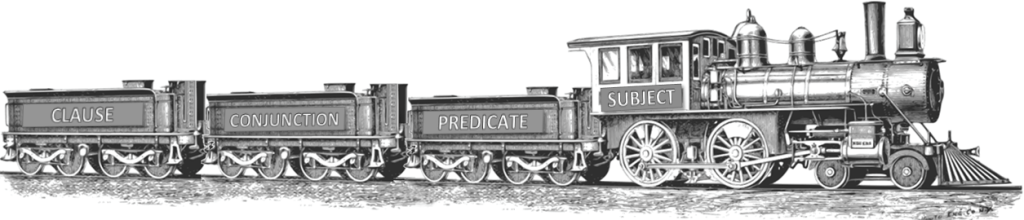
Variety is the spice of life, as they say. The same holds true with our writing. Mixing up our sentence structures makes for more interesting reading. You’ll also find that certain structures fit certain genres. For example, short, snappy sentences carry the action forward at a quick pace for mystery and action thrillers while longer…
-
Punctuation – Part 2
One of the more misused punctuation marks is the pair of quotation marks, or quotes. Quotes are naturally associated with dialogue and references to material taken from other sources, but there are other uses as well. We have two types of quotation marks: single (‘ ’) and double (“ ”). Following is a list of…
-
Punctuation – Part 1

As a creative outlet, writing can really be a blast. There is deep satisfaction in weaving the words together to express the innermost workings of our heart and imagination. Words are fun. Punctuation? Well, it’s not for everyone. Many writers would just as soon plead ignorance and leave the punctuation to the editors. But the…
-
Parts of Speech – Part 2
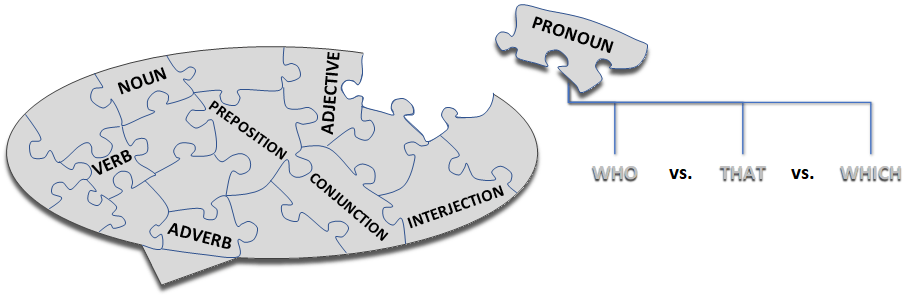
The pronouns who, that, and which are often used interchangeably when it is not grammatically correct to do so. This post highlights the basic differences in usage. At a high level: To better understand the difference between that and which, we need to explain what restrictive and non-restrictive clauses are. Restrictive Clause: phrase that narrows…
-
Parts of Speech – Part 1

This post provides a quick review of the basic parts of speech. Nouns, pronouns, verbs, adverbs, adjectives, prepositions, conjunctions, and interjections each have their own function in a sentence and can break our writing when used incorrectly. NOUNS: A proper or common noun may be used as the subject of a sentence, the object of…
 centralhoustoniwa.com